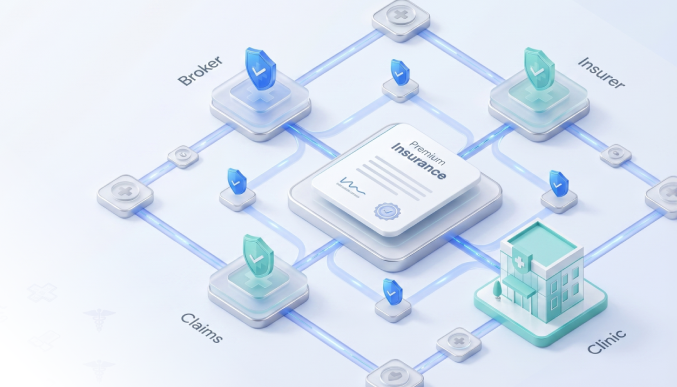
When you buy an insurance policy, you typically interact with one person or a website. You see a logo, pay a premium, and receive a contract. But that transaction is merely the tip of the iceberg. Beneath the surface lies a vast, interconnected global ecosystem of specialised players who identify, price, manage, and ultimately pay for your risks.
When a Gold Bullions dealer in Manila pays her annual Jewellers Block Insurance premium through JADE, that money does not simply sit in an account waiting for a claim. It enters a carefully structured chain that stretches from our office in Singapore to underwriting rooms in London, reinsurance towers in Zurich, and capital markets in New York. Along the way, it passes through the hands of agents, brokers, underwriters, syndicates, and reinsurers, each playing a distinct and indispensable role.
Understanding this ecosystem is not an academic exercise. It is the key to understanding why your premium costs what it does, why certain risks are difficult to insure, why claims take the time they take, and how to negotiate more effectively as a buyer of insurance.
In this second instalment of the Insurance Decoded series, we will trace the complete journey of a premium from start to finish, introducing every player in the chain and explaining what they do, how they earn, and why they matter.
The Players in the Insurance Food Chain
1. The Insured (The Policyholder): The Risk Originator
Every insurance transaction begins with risk exposure. The policyholder is the risk originator, the point at which the entire ecosystem comes to life.
Risk arises from professional activities (a surgeon performing an operation), asset ownership (a jeweller holding millions in loose diamonds), operational processes (a factory running heavy machinery), or liability exposure (a company facing potential lawsuits from customers or employees). The policyholder seeks financial protection against uncertain loss, and they pay a premium in exchange for a contractual promise of indemnity.
The insured might be a homeowner, a hospital group, a shipping company, or a multinational corporation managing liability across twenty countries. Regardless of the scale, the fundamental need is the same: transfer the financial burden of an uncertain event to someone better equipped to absorb it. In specialty lines, policyholders almost always enter the system through intermediaries rather than accessing insurers directly, which brings us to the next layer of the chain.
2. Insurance Agents
An insurance agent is typically the first point of contact for the insured. Agents are licensed individuals or firms that sell insurance products on behalf of one or more insurers.
Types of Agents
- Tied agents (or captive agents) represent a single insurer exclusively. They can only offer products from that one company. The advantage for the insured is deep product knowledge. The disadvantage is limited choice.
- Independent agents (or general agents) represent multiple insurers and can compare products across the market. They offer broader choice but may lack the deep specialist knowledge that comes from focusing on a single product suite.
Agents are compensated primarily through commissions, typically a percentage of the premium paid by the insured. In personal lines (home, motor, travel), agents remain the dominant distribution channel across Asia and much of the developing world.
The Agency Model in Practice
I began my journey as a general insurance tied agent. In those early years, the agency model taught me a fundamental truth about insurance distribution: the relationship between the agent and the client is everything. An agent who understands the client's risk profile, who takes the time to explain what is covered and what is not, and who advocates for the client during the claims process, is worth far more than the commission they earn. The best agents are not salespeople. They are trusted advisors.
3. Bancassurance: The Bank Led Model
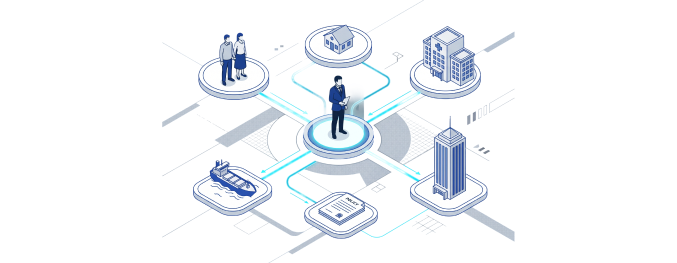
Especially dominant in Southeast Asia and Europe, bancassurance involves banks partnering with insurers to sell insurance products to their existing banking customers. You walk into a bank to arrange a mortgage, and the bank officer offers you life insurance or property coverage as part of the package.
The model works because it leverages the trust the customer already has with their bank and the convenience of a single point of contact. In markets like Singapore, Malaysia, Thailand, and Indonesia, bancassurance accounts for a significant share of life insurance distribution. For insurers, it provides access to a large, captive customer base without the cost of building their own distribution network. For banks, it generates fee income and deepens the customer relationship.
The limitation of bancassurance is product complexity. Bank staff are typically trained to sell standardised products (term life, mortgage protection, savings plans) rather than complex commercial or specialty covers. You are unlikely to find a bancassurance counter that can arrange medical malpractice or jewellers block insurance.
4. Digital Aggregators, Direct Writers, and Embedded Insurance
The rise of InsurTech has introduced entirely new distribution models that are reshaping how insurance reaches the consumer.
Direct writers are insurers that sell directly to consumers through websites or mobile applications, bypassing agents and brokers entirely. By eliminating intermediary commissions, they can offer lower premiums, particularly for standardised personal lines products like motor, travel, and home insurance.

Digital aggregators are comparison platforms that allow consumers to view quotes from multiple insurers side by side and purchase online. They function as digital brokers, earning commissions or referral fees from the insurers whose products they display.
Embedded insurance is perhaps the most significant emerging trend. Rather than insurance being a standalone purchase, it is bundled seamlessly into another transaction. When you book a flight and are offered travel insurance at checkout, or when you purchase a mobile phone and are offered screen protection cover, that is embedded insurance. The product is integrated into the customer journey of a non insurance platform, making the purchase frictionless and contextually relevant.
These digital channels are growing rapidly, but they have not replaced traditional intermediaries. Complex commercial and specialty risks still require the expertise, judgement, and negotiation skills that only experienced brokers and agents can provide. The digital revolution is additive, not substitutive. It expands the market rather than merely cannibalising it.
5. Insurance Brokers

While agents represent insurers, brokers represent the insured. This distinction is fundamental and often misunderstood.
An insurance broker is a licensed intermediary who acts on behalf of the buyer of insurance. The broker's duty is to understand the client's risk exposures, source the most appropriate coverage from the market, negotiate terms and pricing, and assist with claims when they arise. The broker works for the client, not the insurer.
Why Brokers Matter
In complex commercial and specialty insurance, brokers are indispensable. Consider a large conglomerate seeking insurance coverage for their 20 business verticals across three countries. No single insurer may be willing to take on the entire risk. The broker's job is to structure the programme, approach multiple insurers, negotiate capacity and pricing from each, and assemble a solution that provides comprehensive coverage at a competitive cost.
The major global broking houses, firms like Marsh, Aon and WTW (Willis Towers Watson), move billions of dollars in premium annually and have the market leverage to negotiate terms that individual buyers simply cannot achieve on their own.
Wholesale Brokers and the London Market
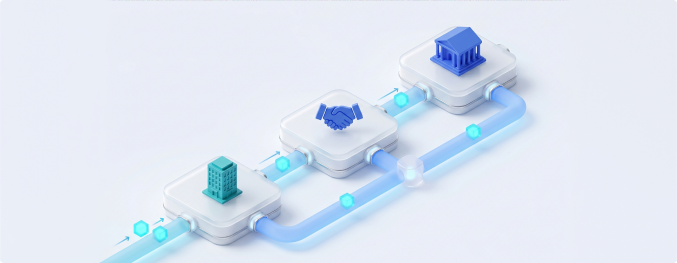
Within the broking world, there is a further specialisation. Wholesale brokers (also called placing brokers or London market brokers) act as intermediaries between local markets and specialist insurers or Lloyd's syndicates. They typically do not deal with the public directly. Instead, they take complex or niche risks that local retail brokers or agents have sourced and place them into specialist markets that have the appetite, expertise, and capacity to underwrite them.
For a firm like JA Assure Group, wholesale brokers play an essential role in our ecosystem. As a Lloyd's Coverholder, we underwrite risks locally in Asia under delegated authority from Lloyd's syndicates. The wholesale broker is the vital link between us and the London market. They facilitate the binding authority agreements, ensure compliance with Lloyd's regulatory requirements, handle bordereaux reporting, and serve as the conduit through which premiums and claims flow between our operation and the syndicate. Without the wholesale broker, a Coverholder in Singapore would have no structured pathway into the Lloyd's market.
Major wholesale broking firms operating in the London market include Howden and Gallagher. Their expertise lies not in selling insurance to end clients, but in understanding the appetite of Lloyd's syndicates, structuring binding authorities, and ensuring that delegated underwriting arrangements are properly governed.
6. Underwriters
If the broker is the architect of the insurance programme, the underwriter is the gatekeeper. Underwriters are the professionals who assess risk, decide whether to accept it, determine the terms and conditions under which it will be covered, and set the price.

Underwriting is both a science and an art. The science involves actuarial data, loss history, exposure modelling, and statistical analysis. The art involves judgement, experience, and an understanding of risk factors that cannot be captured in a spreadsheet.
The Underwriting Process
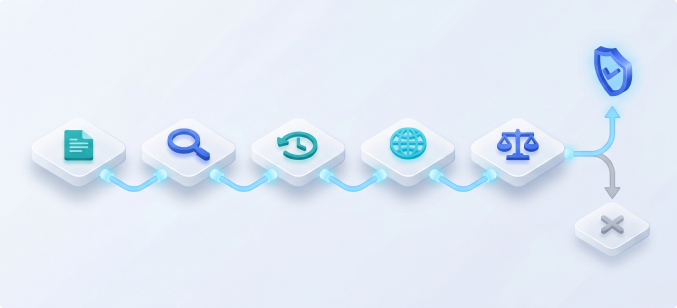
When a risk is presented to an underwriter (usually via a broker or agent), the underwriter evaluates several factors. These include the nature and severity of the risk, the claims history of the insured, the risk management practices in place, the territorial exposure, the regulatory environment, and the adequacy of the proposed premium relative to the expected loss.
The underwriter then decides to accept the risk as presented, accept it with modifications (such as higher deductibles, specific exclusions, or subjectivities), decline the risk entirely, or quote a counteroffer at a different price or on different terms.
Delegated Underwriting Authority
In many markets, insurers delegate underwriting authority to third parties known as Managing General Agents (MGAs) or Coverholders. This is where the modern insurance ecosystem becomes particularly interesting.
A Coverholder is a firm that has been granted binding authority by an insurer (or Lloyd's syndicate) to underwrite and issue policies on their behalf, within agreed parameters. The Coverholder does not carry the risk on its own balance sheet. The risk remains with the insurer or syndicate that granted the authority. But the Coverholder makes the day to day underwriting decisions, issues policies, and often handles claims.

JA Assure Group operates as a Lloyd's Coverholder, which means we have been vetted and approved by Lloyd's to underwrite specific classes of business (jewellers block, and specialty lines) under delegated authority. This model allows us to combine deep local market expertise with the financial strength and global reputation of Lloyd's of London.
7. Actuaries: The Architects of Pricing
If underwriters are the gatekeepers who decide whether to accept a specific risk, actuaries are the architects who design the pricing framework within which those decisions are made. They are the mathematical experts who build the models that make insurance financially viable.
Actuaries do not look at your individual application. They look at data from millions of policyholders, decades of claims experience, economic trends, demographic shifts, and catastrophe models to predict future losses with statistical precision. Using the Law of Large Numbers (which we explored in Blog 1), they calculate how much premium the company must collect today to pay for the claims that will statistically materialise tomorrow, next year, and decades into the future.
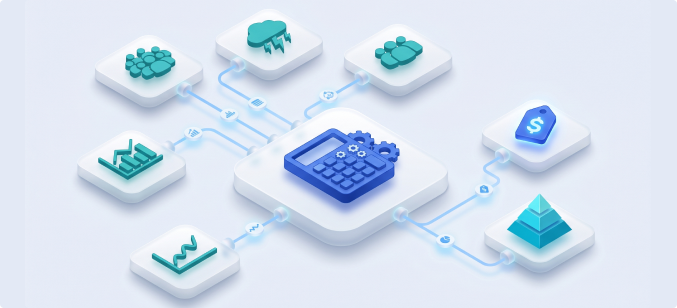
The actuarial profession is one of the most rigorous in the financial world. Qualified actuaries typically undergo seven to ten years of examinations and professional development. Their work underpins not just pricing but also reserving (estimating how much money must be set aside for claims that have been reported but not yet settled), capital modelling (determining how much capital the insurer needs to remain solvent under various stress scenarios), and product design.
In simple terms: underwriters decide whether to accept your risk. Actuaries determine the price at which accepting that risk makes financial sense for the company.
8. Claims Adjusters: The Promise Keepers
When a loss occurs, the sales process ends and the service process begins. Claims adjusters are the professionals who investigate losses, verify coverage, and determine the payout amount. They are, in a very real sense, the people who deliver on the insurer's promise.
Staff adjusters are employed directly by the insurance company and handle the insurer's routine claims workload.
Independent adjusters are external professionals hired on a case by case basis, particularly during catastrophe events when the volume of claims overwhelms the insurer's internal capacity. After a major hurricane or earthquake, thousands of independent adjusters may be deployed to assess damage across an entire region.
Loss adjusters (or chartered loss adjusters) are specialists who handle complex or high value claims, often involving forensic investigation, engineering analysis, or specialist valuation. In the Lloyd's market, loss adjusters from firms like Crawford, McLarens, and Sedgwick play a critical role in the resolution of major claims.
The quality of the claims experience is often the single most important factor in a policyholder's perception of their insurer. You can have the most sophisticated underwriting and the most competitive pricing in the market, but if the claims process is slow, adversarial, or opaque, you will lose the client. This is why DoctorShield invests heavily in claims triage and management: because for a doctor facing a malpractice allegation, the claims experience is not a transaction. It is a lifeline.

9. Insurance Companies (Insurers or Carriers)
Insurance companies, also known as carriers, are the entities that bear the financial risk. When a claim is made, it is ultimately the insurer's capital that pays for it (subject to any reinsurance arrangements).
Insurers earn revenue from two sources. The first is underwriting profit: the difference between premiums collected and claims paid (plus operating expenses). The second is investment income: the returns generated by investing the pool of premiums (known as the "float") in bonds, equities, real estate, and other assets during the period between collecting the premium and paying the claim.
Some of the world's most profitable companies, including Berkshire Hathaway under Warren Buffett, have built their empires on the intelligent deployment of insurance float. Buffett has described insurance float as "money that doesn't belong to us but that we get to invest." It is one of the most powerful concepts in finance.
Types of Insurance Companies
Stock companies are owned by shareholders and operate for profit. They are the most common form globally and include names like AIG, Allianz, Zurich, and Chubb.
Mutual companies are owned by their policyholders. Profits are returned to policyholders in the form of dividends or reduced premiums. Examples include Liberty Mutual and Nationwide.
Captive insurers are insurance companies created by a parent organisation to insure its own risks. Large corporations and even some government bodies establish captives as a tool for risk retention, tax efficiency, and direct access to the reinsurance market.
Types of Insurance Companies
The loss ratio is the percentage of premiums paid out in claims. If an insurer collects $100 million in premium and pays $65 million in claims, the loss ratio is 65 percent.
The combined ratio adds operating expenses (commissions, administration, overheads) to the loss ratio. If the loss ratio is 65 percent and the expense ratio is 30 percent, the combined ratio is 95 percent. A combined ratio below 100 percent means the insurer is making an underwriting profit. A combined ratio above 100 percent means the insurer is paying out more in claims and expenses than it collects in premium, and must rely on investment income to remain profitable.
These ratios are the vital signs of the insurance industry. When you see headlines about insurers raising premiums after a year of catastrophic losses, it is because combined ratios have deteriorated and the market is correcting to restore profitability. Understanding this dynamic helps you anticipate price cycles and negotiate more effectively.
10. Lloyd's of London: A Market, Not a Company
Lloyd's of London deserves its own section because it is one of the most misunderstood entities in the insurance world. Lloyd's is not an insurance company. It is a marketplace where multiple insurers (known as syndicates) come together to share risk.
Think of Lloyd's as a stock exchange for insurance. Just as the New York Stock Exchange provides the platform for companies to list shares and investors to trade them, Lloyd's provides the platform for syndicates to accept risk and brokers to place it. The Corporation of Lloyd's sets the rules, standards, and regulatory framework, but it does not itself underwrite any risk.
How Lloyd's Works
Each Lloyd's syndicate is backed by capital from investors known as "Names" (historically wealthy individuals, now mostly institutional capital vehicles known as corporate members). The syndicate is managed by a Managing Agent, which employs the underwriters who assess and accept risks.
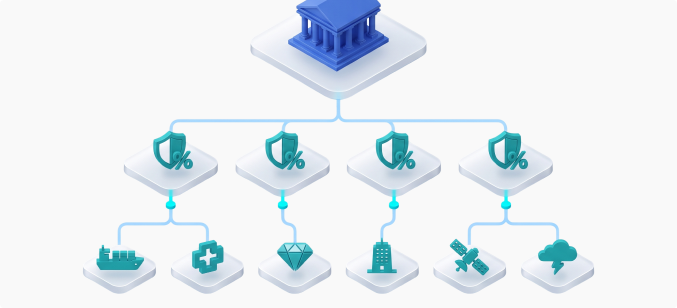
When a broker brings a complex risk to Lloyd's, they walk the underwriting room (known as "the Box") and present the risk to multiple syndicates. Each syndicate may agree to take a percentage of the risk. The lead underwriter sets the terms and price, and following underwriters either accept those terms or negotiate their own. The result is a risk shared across multiple pools of capital, providing enormous capacity for risks that no single insurer could absorb alone.
This is how Lloyd's insures satellites, oil rigs, celebrity body parts, and other extraordinary risks that would overwhelm a conventional insurance company.
Coverholders in the Lloyd's Ecosystem
Coverholders like JA Assure Group extend the reach of Lloyd's into local markets around the world. We are the "boots on the ground" in Asia, underwriting risks that Lloyd's syndicates may not have the local presence or expertise to assess directly. The Coverholder model is one of Lloyd's most significant competitive advantages, allowing the market to write business in over 200 countries and territories without maintaining physical offices in each one.
11. Reinsurers: The Insurers of Insurers
Behind every insurance company stands a reinsurer. Reinsurance is, quite simply, insurance for insurance companies. It is the mechanism by which insurers transfer portions of their own risk to other parties, thereby reducing their exposure to large or catastrophic losses.
Without reinsurance, the insurance industry as we know it could not function. No single insurer has the balance sheet to absorb the losses from a major hurricane, a pandemic, or a series of industrial catastrophes. Reinsurance spreads these risks across the global financial system, ensuring that no single entity bears an unbearable burden.
Types of Reinsurance
Treaty reinsurance is a standing agreement where the reinsurer automatically accepts a defined share of all risks underwritten by the insurer within a specified class of business. For example, a treaty might stipulate that the reinsurer takes 30 percent of all marine cargo risks written by the insurer. This is the most common form of reinsurance and operates continuously.
Facultative reinsurance is arranged on a case by case basis for individual risks that fall outside the scope of existing treaties or that are too large or unusual to be covered automatically. Each facultative placement is individually negotiated between the insurer and the reinsurer.
Proportional vs. Non Proportional

Proportional reinsurance (quota share and surplus) means the reinsurer shares a fixed percentage of premiums and claims. If the reinsurer takes 40 percent of the premium, they pay 40 percent of every claim.
Non proportional reinsurance (excess of loss) means the reinsurer only pays when claims exceed a specified threshold. For example, the insurer might retain the first $5,000,000 of losses and the reinsurer covers everything above that amount. This structure protects insurers against catastrophic, low frequency, high severity events.
The Global Reinsurance Giants
The reinsurance market is dominated by a small number of very large, very well capitalised firms. Munich Re, Swiss Re, Hannover Re, SCOR, and Berkshire Hathaway Reinsurance are among the most significant. These companies operate globally and their financial strength underpins the solvency of thousands of primary insurers around the world. When you hear that your insurer has an "A" rating from AM Best or Standard & Poor's, part of what that rating reflects is the quality and depth of their reinsurance programme.
12. Retrocessionaires and the Capital Markets: The Final Frontier
The chain does not stop at reinsurers. Reinsurers themselves purchase reinsurance, a practice known as retrocession. The parties that accept this risk are called retrocessionaires.
Retrocession exists because even the largest reinsurers need to manage their peak exposures. After a year of significant natural catastrophes, for instance, a reinsurer's accumulated losses might approach the limits of prudent capital management. By retroceding portions of their risk, reinsurers maintain their own solvency and ability to continue providing capacity to primary insurers.
Alternative Risk Transfer: Where Insurance Meets Wall Street
At the very top of this chain, insurance risk increasingly finds its way into the global capital markets. This convergence of insurance and finance is known as Alternative Risk Transfer (ART), and it represents one of the most significant structural changes in the industry over the past two decades.
Catastrophe bonds (cat bonds) are debt instruments where the investor's principal is at risk if a specified catastrophic event occurs (such as a hurricane exceeding a certain wind speed or an earthquake exceeding a certain magnitude). In exchange for bearing this risk, investors receive coupon payments significantly above standard bond yields. If the triggering event does not occur, the investor gets their principal back plus the coupons. If it does occur, the principal is used to pay insurance claims.
Insurance Linked Securities (ILS) is the broader category that includes cat bonds, structured quota shares, collateralised reinsurance, and other instruments that allow pension funds, hedge funds, sovereign wealth funds, and institutional investors to participate directly in insurance risk. The ILS market now exceeds $100 billion in deployed capital globally.
This convergence matters because it provides the insurance ecosystem with an almost limitless source of additional capacity. When traditional reinsurance markets tighten after a catastrophe year, capital markets capacity can fill the gap. It is a remarkable example of financial engineering in service of societal resilience, connecting the premiums of a gold bullion dealer in Manila to the portfolios of pension funds in Toronto and sovereign wealth funds in Abu Dhabi.
13. Regulators: The Guardians of the System
Every layer of the insurance ecosystem operates under regulatory oversight. Regulators exist to protect policyholders, ensure the solvency of insurers, maintain market integrity, and prevent systemic risk.
The regulatory landscape varies significantly by jurisdiction. In the United Kingdom, the Prudential Regulation Authority (PRA) oversees the financial soundness of insurers while the Financial Conduct Authority (FCA) ensures fair treatment of customers. In the European Union, the Solvency II framework sets harmonised capital adequacy and risk management standards across member states. In the United States, insurance regulation is handled at the state level, creating a patchwork of 50 different regulatory regimes, each with its own licensing requirements, rate approvals, and consumer protection rules. Across Asia, national regulators such as Bank Negara Malaysia, the Office of Insurance Commission in Thailand, and the Insurance Regulatory and Development Authority of India each enforce their own frameworks tailored to local market conditions.
Despite these differences, regulators around the world share common objectives. They set minimum capital requirements to ensure insurers can meet their obligations. They approve or review policy wordings to protect consumers from unfair terms. They license intermediaries and monitor conduct. They investigate complaints and can intervene if an insurer's financial position deteriorates to the point where policyholders may be at risk. For Lloyd's Coverholders operating across borders, navigating this regulatory mosaic is a critical part of doing business, as each territory in which we underwrite has its own compliance requirements that must be satisfied.
The regulatory framework is what gives policyholders confidence that the promise behind their insurance policy is backed by substance, not just words on a page.
The Flow of Money: Following the Premium
Now that we have identified all the players, let us trace the journey of a single premium payment to see how money flows through the ecosystem.
Imagine a Jeweller in Bangkok purchases a Jewellers Block insurance policy with an annual premium of $5,000. Here is the approximate journey of that premium.
| Recipient | Approximate Share | What They Do With It |
|---|---|---|
| Local Agent / Broker | 10 to 15% | Commission for sourcing and servicing the client relationship |
| Local Insurer | 5 to 10% | Fronting and retention fee to cover operating costs, and profit |
| Coverholder (JA Assure) | 10 to 20% | Underwriting fee, policy administration, and claims triage |
| Lloyd's Broker | 5 to 10% | Brokerage for placing the risk into Lloyd's |
| Lloyd's Syndicate | 40 to 55% | Net premium retained to cover claims, operating costs, and profit |
| Reinsurer | 15 to 25% | Reinsurance premium ceded by the syndicate to protect against large losses |
The exact percentages vary by line of business, territory, and the specific arrangements in place. But the pattern is consistent: each participant in the chain earns a share of the premium in exchange for the value they add, whether that value is distribution, underwriting expertise, risk bearing capital, or regulatory compliance.
This is why insurance professionals speak of the "cost of the chain." Every intermediary adds value, but every intermediary also adds cost. One of the most important trends in modern insurance is the effort to shorten this chain through technology, direct distribution, and delegated authority models like the Coverholder structure, without sacrificing the expertise and risk management that each layer provides.
The Flow of Claims: When the Promise is Tested

The premium flow is one side of the equation. The other is the claims flow, and this is where the system is truly tested.
Imagine a jewellery retailer insured through JADE is operating a trade exhibition in Jakarta when armed robbers raid the booth, stealing loose diamonds and gold pieces worth $350,000. The claims journey begins immediately.
The insured contacts their local agent or local insurer to report the loss. The local insurer (in this case, the Indonesian Insurer) initiates the claims process. Our first step is to instruct the insured to file a police report with the Indonesian authorities and secure any remaining stock. We then appoint an independent loss adjuster in Jakarta to investigate the circumstances of the robbery, verify the inventory records against the reported loss, examine the security arrangements that were in place, and assess whether the insured took reasonable steps to protect the stock (the principle of loss minimisation from Blog 1). The coverholder, JA Assure in this case will be working closely with the Local insurer.
Simultaneously, we evaluate the claim against the policy terms. Was the stock covered while in transit and at exhibitions outside the insured's primary premises? Was the territorial scope of the policy broad enough to include Indonesia? Were the security conditions stipulated in the policy (such as minimum safe requirements or escort protocols) complied with? These are the questions that determine whether the claim is valid and payable.
If the claim falls within the Coverholder's delegated claims authority, we manage the entire process directly, coordinating with the loss adjuster via the local insurer, reviewing the police report, verifying stock records, and authorising payment. If the claim exceeds our authority threshold, we escalate it to the Lloyd's syndicate's claims team for direction. For very large or complex claims, the syndicate may involve its reinsurers under the terms of the reinsurance treaty.
Throughout this process, the insured has the benefit of a coordinated response involving local expertise of the local Insurer (and the Coverholder working with adjusters on the ground in Jakarta), market expertise (the syndicate in London), and catastrophe capacity (the reinsurer). This layered approach is what allows the insurance ecosystem to handle everything from a single jewellery theft to a multi billion dollar natural disaster.
The Claims Cascade

Large losses do not stay at one layer. They cascade through multiple levels of the ecosystem. A catastrophic hurricane, for example, triggers millions of individual claims at the primary insurer level. Those aggregated losses breach reinsurance treaty thresholds, activating reinsurance recoveries. If the event is severe enough, reinsurers' own retrocession programmes are triggered, and at the very top of the chain, cat bond investors may lose a portion of their principal. A single weather event can ripple from a homeowner in Florida through to a pension fund in Scandinavia. Understanding this cascade explains why catastrophic years lead to premium increases across the entire market, even for risks seemingly unrelated to the event itself.
The Information Flow: Data as Currency
There is a third flow that runs through the entire ecosystem, one that is often overlooked: the flow of information.
Underwriting decisions are only as good as the data that informs them. Agents collect risk information from clients. Brokers structure and present that information to underwriters. Underwriters analyse it against historical loss data and actuarial models. Claims data feeds back into underwriting models, refining future pricing. Reinsurers aggregate data from hundreds of insurers to build their own view of global risk.
This information cycle is continuous and self correcting. It is also the frontier where technology is having its most profound impact on the industry. Artificial intelligence, telematics, satellite imagery, and real-time data analytics are transforming every stage of this information flow, enabling faster underwriting, more accurate pricing, and earlier fraud detection. But the fundamental architecture remains: data flows upward through the chain, and capital flows downward to meet risk.
Why Understanding the Ecosystem Gives You Power
As a buyer of insurance, understanding this ecosystem gives you three practical advantages.
First, it helps you negotiate. When you understand that your premium is being divided among multiple parties, you can ask informed questions about commission levels, brokerage fees, and whether there are more efficient routes to the same coverage.
Second, it helps you choose the right intermediary. Not all risks require the full chain. A simple motor policy can be purchased directly from an insurer or through an agent. A complex multinational liability programme requires a broker with access to London market syndicates and reinsurance capacity. Matching the intermediary to the complexity of the risk saves time and money.
Third, it helps you understand claims. When a large claim takes time to resolve, it is often because multiple layers of the chain are involved in the decision. Understanding this process reduces frustration and helps you provide the right information to the right people at the right time.
The Chain at a Glance
Before we close, let us distil the entire ecosystem into its simplest form. The policyholder transfers risk to an intermediary (agent or broker). The intermediary places that risk with an underwriter at an insurance company, MGA, or Coverholder. The insurer pools premiums, guided by actuaries. If the risk is too large or concentrated, the insurer cedes a portion to a reinsurer. If the reinsurer's own exposure becomes too great, they retrocede to retrocessionaires or the capital markets. When a loss occurs, the claims adjuster investigates and ensures the promise is kept. And overseeing every layer of this chain, regulators maintain solvency, fairness, and public trust.
Each player adds value. Each player earns a share. And the entire system depends on every link functioning with integrity.
Looking Ahead
The insurance ecosystem is a multilayered financial architecture where risk originates from policyholders and is progressively distributed across intermediaries, underwriting entities, insurers, reinsurers, and global capital markets. It has evolved over centuries, from individual risk bearers in a London coffeehouse to a global network of interconnected institutions managing trillions of dollars in risk. Yet the fundamental logic has not changed: risk flows upward through the chain, capital flows downward to meet it, and information flows in both directions to keep the system honest and efficient.
Understanding this system enables you to engage with insurance strategically rather than passively. You can ask better questions, choose the right intermediary, anticipate pricing cycles, and navigate the claims process with confidence. That shift, from passive buyer to informed participant, is the single greatest advantage you can give yourself in the insurance market.

In the next instalment of this series, we will explore the different types of insurance that this ecosystem supports, from personal lines to the most exotic specialty classes. We will also examine the technologies that are fundamentally reshaping underwriting, distribution, and claims management, and what that means for the future of the industry.

Disclaimer: The opinions expressed herein are solely those of the author in his personal capacity and do not reflect the views of JA Assure Group, Lloyd's of London, or any associated syndicate or partner.